
 Sleep Training


 The short answer


1What the Ferber method actually means
In practice, a baby is placed down awake or drowsy. If the baby cries, the parent waits for a planned interval, returns briefly to reassure, and then leaves again. The intervals may gradually lengthen. The goal is to reduce a sleep-onset association that requires the same parent action every time the baby reaches lighter sleep.
The important nuance is that research protocols vary. “Ferber,” “graduated extinction,” “controlled crying,” and “controlled comforting” are often used loosely, but they are not always identical in how long parents wait, what they do during checks, or which babies were included.

2Age matters more than a calendar shortcut
For newborns and very young babies, formal extinction-style methods are not the right focus. Sleep is fragmented, feeding needs are real, and the practical priorities are safe sleep, responsive feeding, day-night cues, and parent support.
The strongest randomized evidence for graduated extinction is mainly in older infants, often around 6 months and beyond. Between 4 and 6 months, many families can build routines and gently reduce extra help, but that is different from assuming every 4-month-old is ready for structured crying intervals.

3What sleep training can and cannot promise
Behavioral sleep methods may improve bedtime settling, reduce signaled wakings, and reduce the parent’s sense that sleep is unmanageable. They do not make babies biologically unable to wake. Brief arousals are part of sleep.
The realistic target is a smoother sleep process, not a guarantee of silent nights. If a baby wakes from hunger, illness, discomfort, separation anxiety, or an overtired day, the plan may need adjustment.

4Alternatives if crying intervals feel wrong
Parents do not have to choose Ferber to be serious about sleep. Bedtime fading, camping out, parental-presence fading, responsive settling, and routine repair can all be more acceptable depending on the problem and the parent’s tolerance.
The best method is the one that fits the baby’s age, health, feeding needs, family values, and caregiver mental state. If listening to crying feels overwhelming, a lower-cry approach is a valid path.

Quick reference
0-4 months
Not a first-line approach
Use responsive settling and safe sleep basics
4-6 months
Grey zone
Routines and gentle fading first
6+ months
Possible option
Only when healthy, growing, and feeding needs are understood
Any age
Safety first
Health, feeding, and safe sleep override training plans

Example day
Morning
0-4 months
Use responsive settling and safe sleep basics
Uses not a first-line approach as context for the next plan.
First nap
4-6 months
Routines and gentle fading first
Uses grey zone as context for the next plan.
Midday
6+ months
Only when healthy, growing, and feeding needs are understood
Uses possible option as context for the next plan.
Evening
Any age
Health, feeding, and safe sleep override training plans
Uses safety first as context for the next plan.

Common challenges
Bedtime becomes harder after a late final nap.
 Bedtime becomes harder after a late final nap.
- Likely reason
- Sleep pressure may be too low or the last window may be off.
- Try first
- Protect the bedtime anchor and adjust the final nap.
- How to check
- Watch bedtime settling time for several evenings.
Night wakings increase suddenly.
- Likely reason
- Schedule, feeding, illness, development, or environment may have changed.
- Try first
- Review sleep, feeds, symptoms, and room conditions together.
- How to check
- Look for the same pattern across 3-7 days.
Plan for today
- 1
Confirm the baby is old enough and healthy enough for sleep training.
- 2
Review feeding and growth before reducing night responses.
- 3
Choose a method both caregivers can follow consistently.
- 4
Stop and reassess if crying feels extreme or the baby seems unwell.
Quick routine checklist
How Yorix helps before any sleep training decision
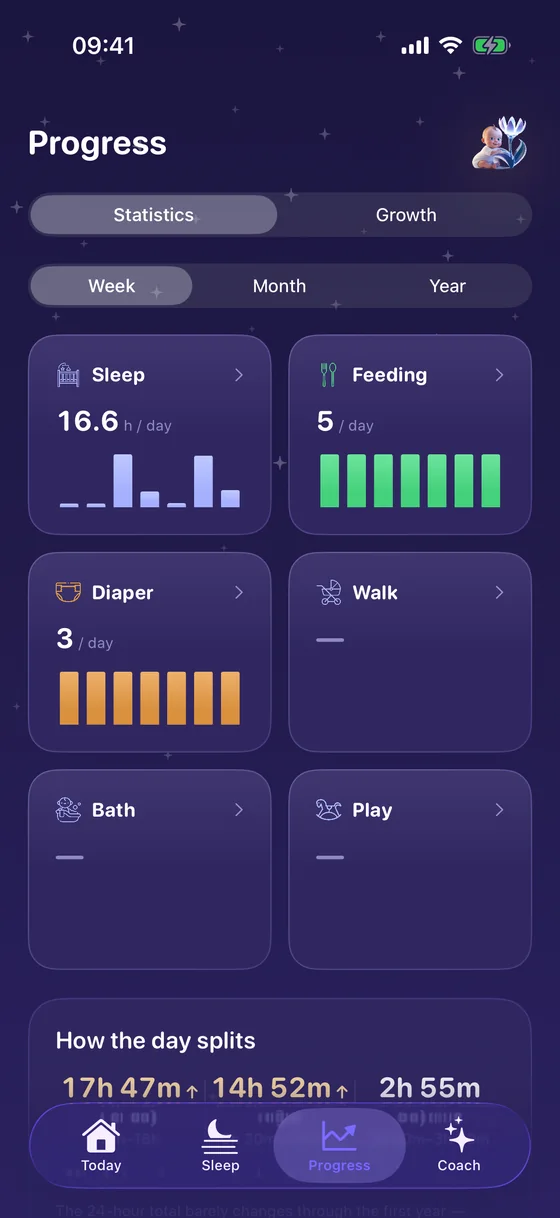
Yorix helps you see whether the real issue is bedtime timing, short naps, feeding patterns, or repeated sleep associations. That makes it easier to choose the right approach instead of jumping straight to a method.
If you do try a gradual plan, Yorix can track bedtime, checks, night wakings, and next-day naps so you can judge progress by patterns, not by one emotional night.
Common questions
Is Ferber the same as cry it out?
Ferber is usually a graduated approach with planned checks. Full extinction is different because parents do not use the same scheduled reassurance checks.
Can I use Ferber for a newborn?
No. Newborn sleep is fragmented and feeding-driven. The focus should be safe sleep, responsive care, and gentle day-night rhythm.
 Turn insights into better days